
An advertising agency exists to build brand: to make people know, want and remember something before they are ready to buy it. That is a different job from a digital marketing agency, which captures demand that already exists, and different again from a communications firm, which manages reputation.
The three get quoted against each other constantly, and the buyer usually cannot tell which one they actually need. This article separates them.
What an advertising agency does, in one sentence
An advertising agency turns a business problem into an idea, and that idea into a campaign that runs: account and planning define the problem, creative makes the idea, media plans where it runs, and production delivers the finished piece.
The four areas inside the agency
Account and planning. The bridge to the client, and the strategy. It reads research and competitors, turns a brief into a defined problem, and writes the creative brief. Its deliverable is a well-defined problem, which sounds unglamorous and is the part that most often goes missing.
Creative (copy + art direction). The agency's heart. Copy handles words and the idea; art direction handles the image. Together they produce the concept, the key visual, the script. Its deliverable is the campaign idea.
Media. Where the campaign runs. TV, magazine, radio, out-of-home, digital and programmatic. Reach, frequency, market. Its deliverable is the media plan.
Production. Gets the idea off the page: production house, cast, music, talent fees and image rights, shooting and post. Its deliverable is the finished film — and its budget is separate, almost never inside the fee. That last detail causes more contract friction than anything else on this list.
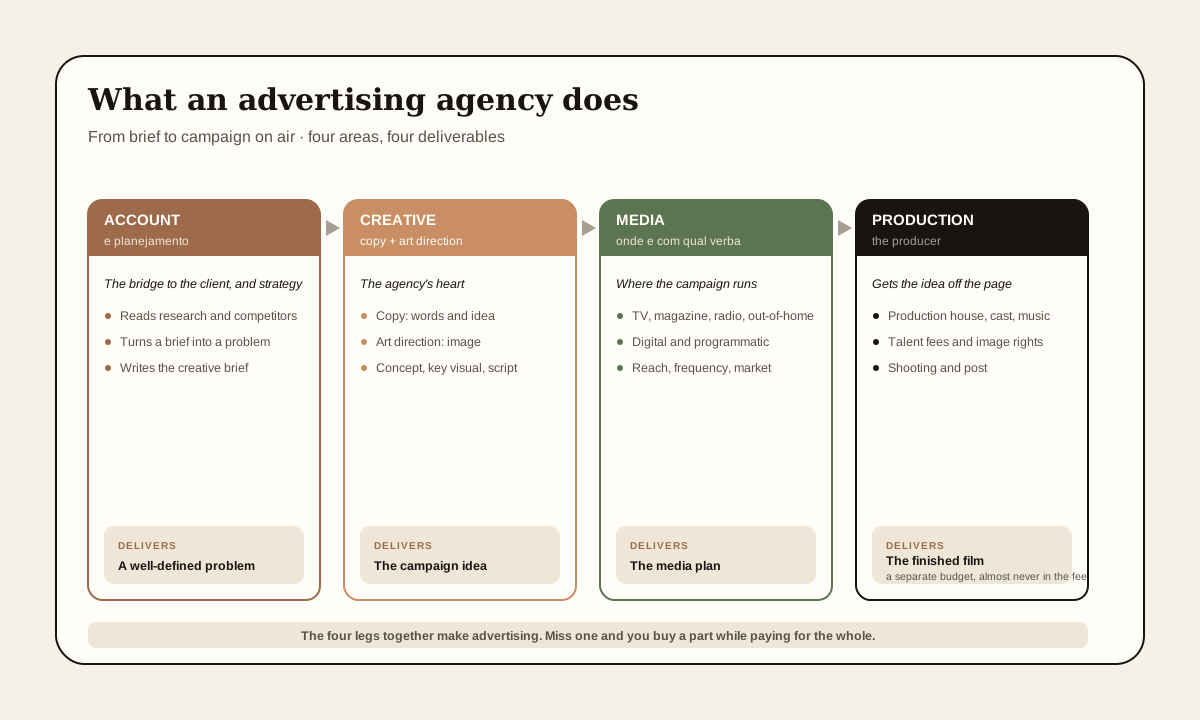
The four legs together make advertising. Miss one and you buy a part while paying for the whole.
Advertising, digital marketing and communications: three logics
| Advertising | Digital marketing | Communications & PR | |
|---|---|---|---|
| Focus | Brand, campaign and desire | Demand, sales and leads | Reputation, press and crisis |
| Deliverable | Concept, film, key visual | Optimized media, funnel, conversion | Coverage, releases, crisis management |
| Competency | Creative and art direction | Media, data, CRO, automation | Relationships with journalists |
| Main KPI | Recall, reach, share of voice | CAC, ROAS, CPL, attributed revenue | Tier 1 mentions, sentiment |
| When to use it | Launching, repositioning, defending territory | Selling now, with a funnel ready | Building and defending reputation |

Today's pain points at the column. If nobody knows who you are, that is the first column. If people know you and are not buying, the second. If people are saying the wrong things about you, the third.
The communications side is covered in more depth in communications agency or marketing agency.
How the line blurred
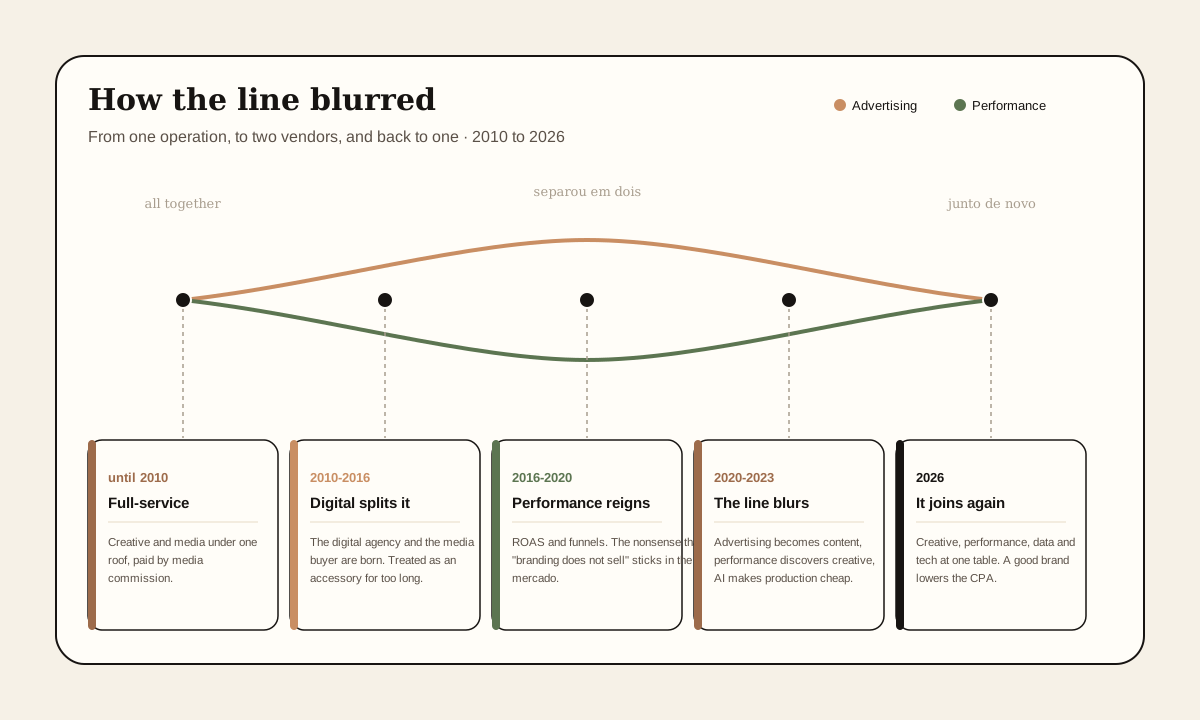
The split between advertising and performance is a recent accident, and it is closing.
Until 2010: full-service. Creative and media lived under one roof, largely paid through media commission. One vendor, one narrative.
2010–2015: digital splits it. The digital agency and the media buyer are born, and get treated as an accessory for far too long.
2015–2020: performance reigns. ROAS and funnels dominate the conversation. The nonsense that "branding does not sell" sticks in the market, mostly because brand effects are slower and harder to attribute, not because they are absent.
2020–2024: the line blurs. Advertising becomes content, performance discovers creative, and AI makes production cheap enough that the old cost barrier between them stops mattering.
2026: it joins again. Creative, performance, data and tech at one table. And the reason is not ideological, it is arithmetic: a good brand lowers the CPA. When media costs keep climbing, the cheapest lever left is being a brand people already recognize.
Advertising or performance? Three questions
1. Do few people know the brand? Or has it become a commodity competing on price alone? Then advertising: create desire and positioning before trying to sell.
2. Do you need sales on a short horizon, with a measurable target and a funnel already built? Then performance: capture the demand that already exists, now.
3. Has the operation matured, with CPA climbing every quarter? That usually means the brand got too small to sustain the selling. Then both layers together: brand feeds performance and lowers the cost.
Three noes and the answer is to start with a diagnosis. Sometimes the real pain is communications, product or price, and no media fixes that.
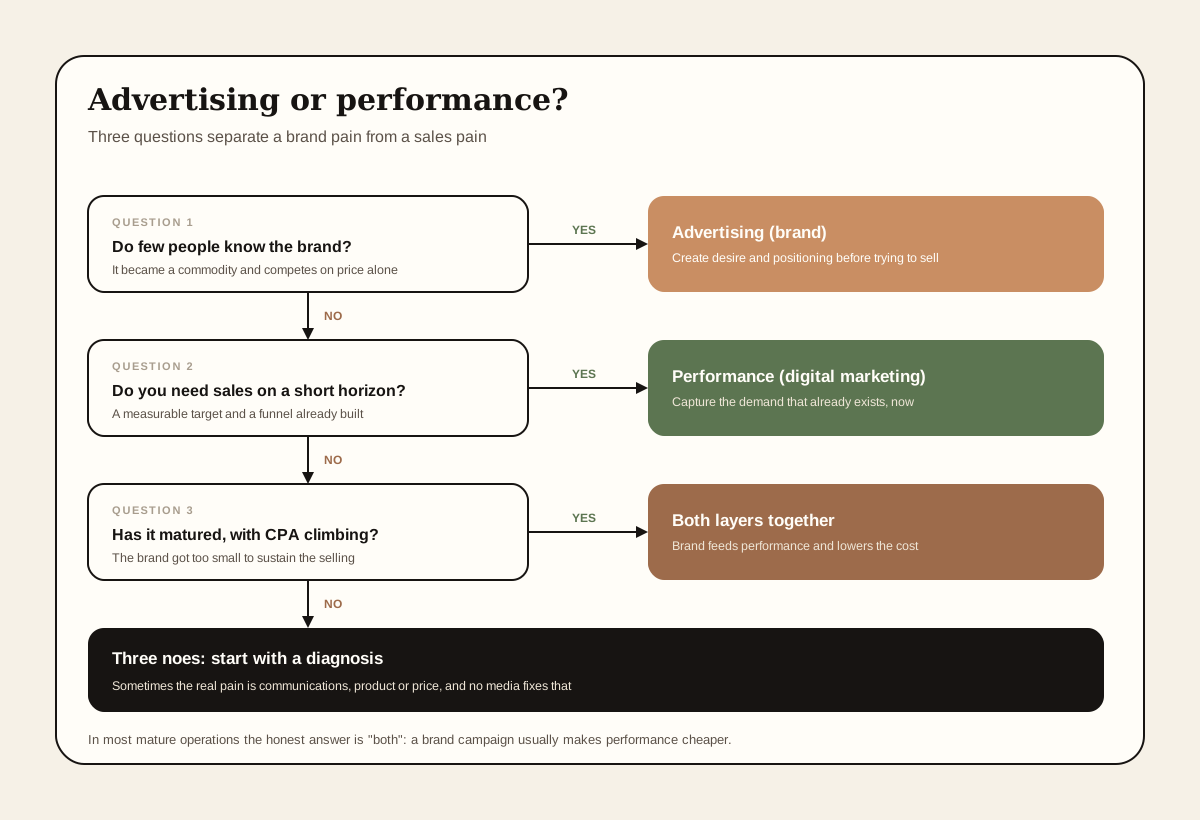
In most mature operations the honest answer is "both": a brand campaign usually makes performance cheaper.
The strong sectors in Metro Vancouver
Every advertising market is shaped by the industries around it, and Metro Vancouver's are distinctive.
Film and creative production. The region punches far above its size in production infrastructure, which means crews, studios and post houses are unusually accessible here. A brand film costs less to make well in Vancouver than the local market size would suggest.
Tech. A dense software and gaming sector, which buys differently: product-led, performance-heavy, with brand usually arriving late and expensively.
Real estate and development. A long-cycle, high-ticket category that leans on brand and positioning more than most, and where campaigns run in seasons.
Tourism and hospitality. Destination, hotel, restaurant, event, season. Brand advertising here behaves almost like a local industry.
Retail, health and professional services. Clinics, gyms, schools, trades, local retail. Seasonal campaigns and neighbourhood-level communication.
What is comparatively thin here: enterprise B2B and heavy martech, which concentrate closer to Toronto's corporate head offices. That shapes what local agencies are good at, and what they are not.
FAQ
What does an advertising agency do? It turns a business problem into a campaign: account and planning define the problem, creative produces the idea, media plans where it runs, and production delivers the finished piece. Its output is brand desire and recall, not directly attributed sales.
What is the difference between an advertising agency and a digital marketing agency? Advertising builds brand and measures recall, reach and share of voice. Digital marketing captures existing demand and measures CAC, ROAS and attributed revenue. They use different competencies and different KPIs, and holding one to the other's metric is how contracts end badly.
Is production included in the agency fee? Almost never. The fee pays for the work of the agency; production (crew, cast, music, image rights, post) is a separate budget. Check this explicitly in the proposal, it is the single most common source of surprise.
Do I need advertising if I am already running performance? If CPA keeps climbing and the funnel is well built, probably yes. That pattern usually means the brand got too small to sustain the volume of selling, and more media spend buys progressively less.
Which comes first, brand or performance? It depends on the pain. With no recognition, brand first. With recognition and no sales, performance first. In a mature operation, both, because brand campaigns lower the cost of performance.
Is Vancouver a good place to produce a campaign? For film and photo production, unusually so. The region's production infrastructure means crews, studios and post are accessible at a level the local market size would not otherwise support.
Conclusion
Advertising, digital marketing and communications are three different jobs that got collapsed into "we need an agency". Advertising makes people want. Marketing captures the ones who already want. Communications manages what people say.
The split between the first two was always an accident of tooling, and it is closing. In 2026 the useful question is not which of the two you buy, it is whether whoever you hire can hold both without letting one sabotage the other.
Read next
- Marketing agency in Metro Vancouver: an honest map of the market · the five types of operation and the local red flags
- What does a marketing agency cost in Metro Vancouver? · the fee range by company size
- Communications agency or marketing agency? What actually differs · the third discipline in depth
- How to choose a marketing agency without wasting budget · the questions that protect the investment
Sources and references
This is Koko's point of view on what advertising still does that performance cannot. If you want a diagnosis before deciding which one you need, talk to us.