
Google created a new Search Console property type, the platform property, that shows how your Instagram, TikTok, X and YouTube content performs in search: clicks, impressions, CTR, average position and, most importantly, which terms people typed to get there. The announcement landed on July 7, 2026 and the global rollout finished on the 29th. You do not need a website to use it.
Google has indexed social posts for a long time. Anyone working in content already knew that and already wrote captions with search in mind: check the term before writing, resolve the intent in the first line, name files and write alt text with an SEO head on. The problem is that it stopped there. You could argue for the technique and defend it, but you could not prove it. In the results meeting, with no number in hand, whoever talked loudest won.
That changed.
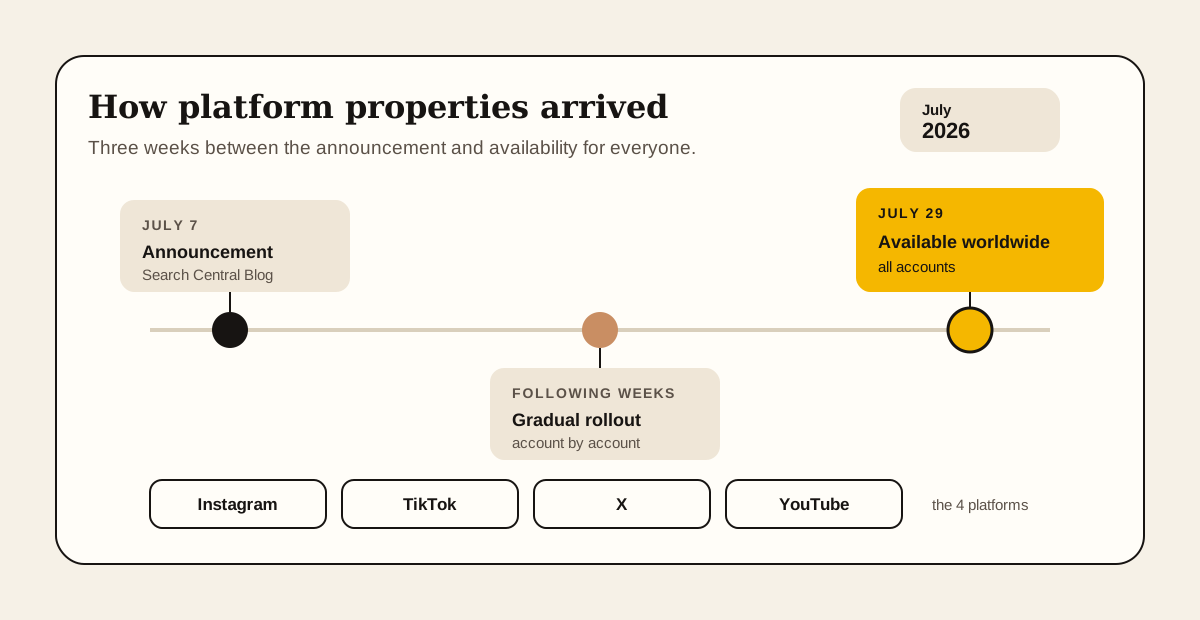
What a platform property is
Until now Search Console had two property types: domain and URL prefix. Both required a website. The platform property is a third type, and the thing being measured is not your domain, it is your account on a platform.
Four platforms are covered: Instagram, TikTok, X and YouTube. The data spans Google Search, Discover and Google News, not just the list of blue links.
The practical consequence catches a lot of people off guard: creators and brands that never had a website now have access to Search Console. The bar for who gets to measure organic performance stopped being "owns a domain".
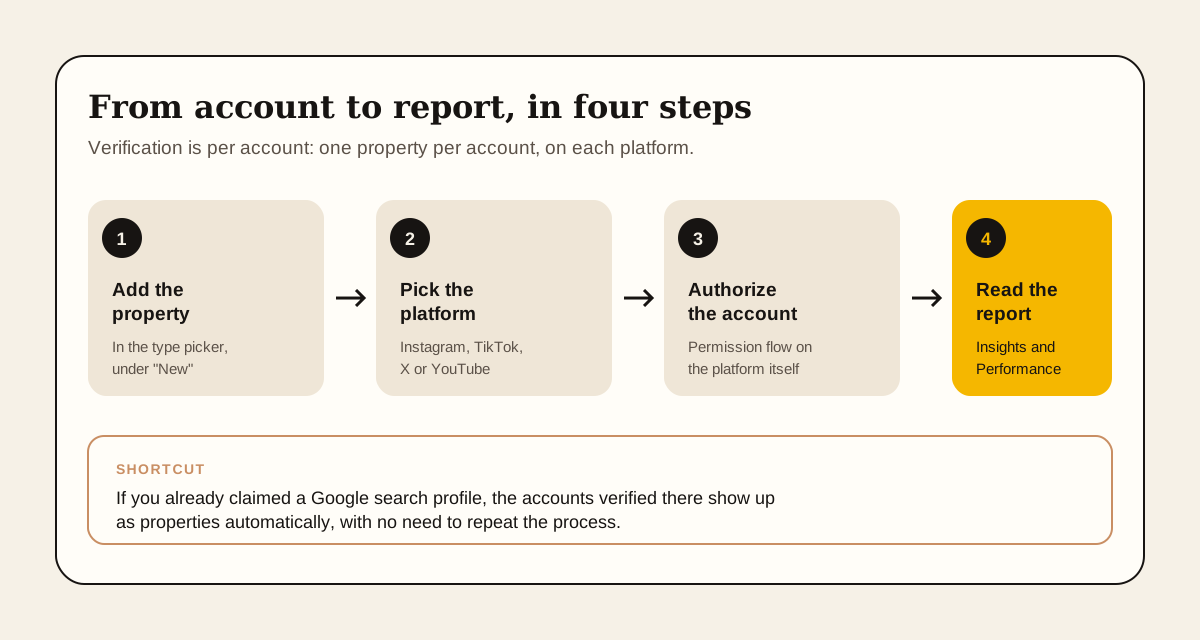
How to connect your account
Verification is individual, account by account, through an authorization flow on the platform itself. If you already had a Google search profile claimed, the accounts verified there come in automatically as properties in Search Console.
One note that is worth money: Google has not said whether a freshly created property shows retroactive data or only starts accumulating from verification. Until that is clear, the safe behaviour is to connect today. The cost of connecting early is zero. The cost of connecting late may be having no baseline exactly when someone asks for history.
What the reports show
There are two levels, and they serve different purposes.
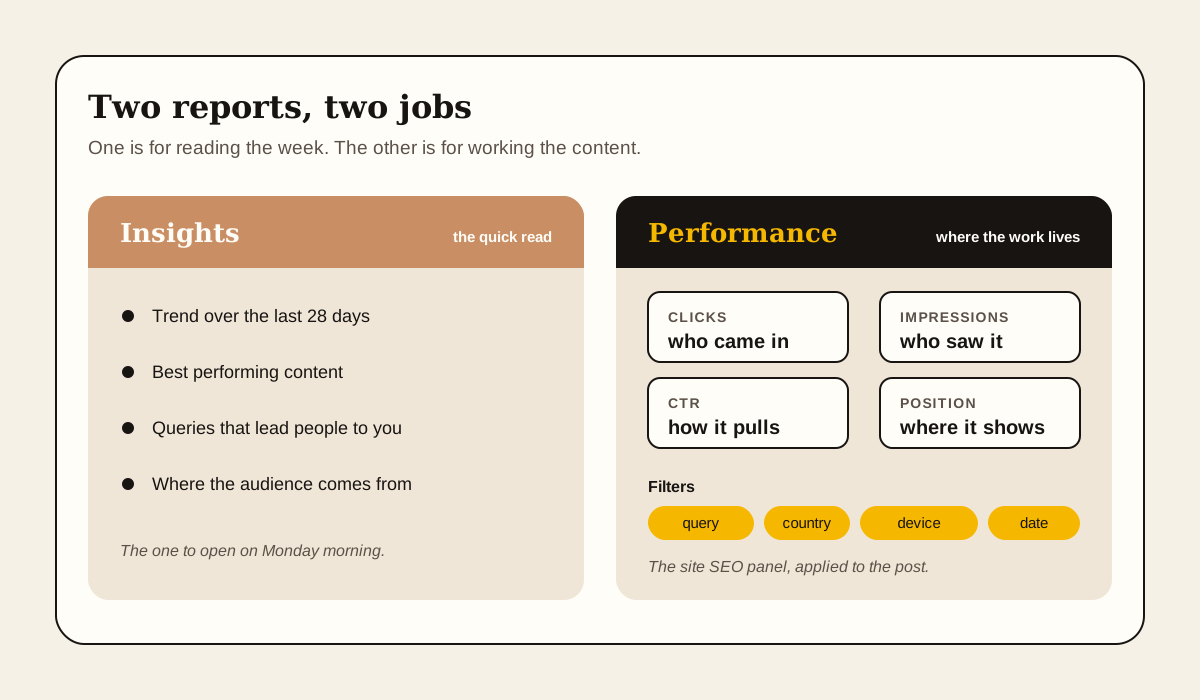
Insights is the summary. It shows the trend over the last 28 days, your best performing content, the queries that bring people to you, and where the audience comes from. This is the report to open on Monday morning to understand the week's movement.
Performance is where the work lives. Clicks, impressions, CTR and average position, filterable by query, country, device and date range. It is the same panel anyone doing site SEO knows by heart, applied to what you publish outside the site.
What changes for people making content
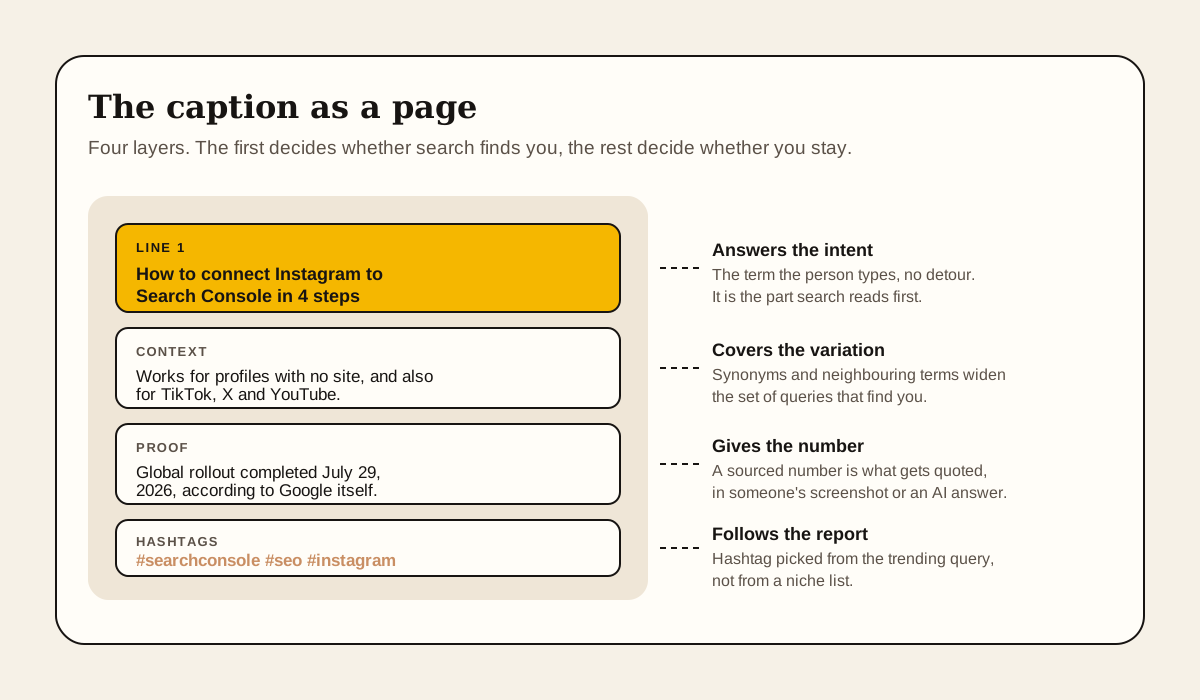
The caption now has queries, clicks, CTR and position, just like any page on the site. That reorganizes three decisions that used to be made in the dark.
First, the post copy. Google itself recommends, in the documentation, reviewing titles and captions and tracking what the change does to performance. That is A/B testing copy with a search metric beside it, something no social platform gives you in its native panel today.
Second, hashtags. The report shows which queries are trending. Picking a hashtag by looking at a term that is climbing in search is a different exercise from picking by intuition or from a "best hashtags in your niche" list.
Last, old content. When an old post gets a spike of search traffic, that is now visible. Worth repackaging the subject instead of discovering the demand by accident six months later.
Three things to do this week
- Connect the accounts. All four, even the ones you assume have no search volume. The data only starts existing after you connect.
- Review the title and caption on what already performs. A post with reach and a generic caption is the lowest fruit on the tree. Change the copy, note the date, watch the query.
- Cross-reference with what the site already ranks for. Where the brand loses a query on the site, the profile can take the space before a competitor does. And the reverse: a query the profile wins and the site does not cover is an article brief, already written.
Why this is not small news
Every year someone declares SEO dead. And every year it is the line that grows most, both here and at the clients who invest in it.
Worth showing the number instead of repeating the phrase. Over the last 60 days, 41 companies came to Koko asking for a quote. Of those, 18 arrived with no paid click: Google search, the map profile, the brand typed straight into the bar. Seven came specifically from organic search and the Google profile. Google Ads, which we pay for, brought five in the same period.
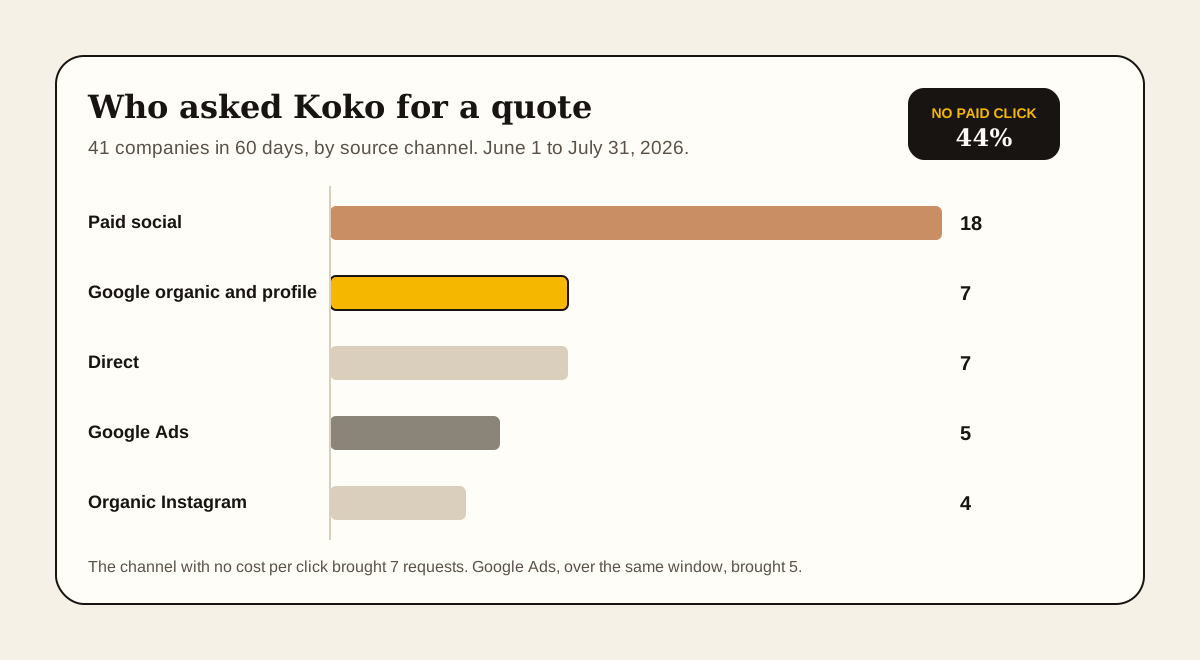
Seven against five. The channel with no cost per click brought more people wanting to hire than the channel that has one. Nobody needs to cut media because of this. But you can stop treating organic as decoration.
And here is why it matters now: the same reasoning that holds up site SEO finally has a real instrument on the social profile. Whoever was already writing captions with search in mind is about to start proving it. Whoever was writing in the dark is about to find out how much they left on the table.
What we still do not know
Two questions remain open, and it is more honest to say so than to fill the gap with guesswork.
The first is whether data is retroactive, which Google did not clarify in either of its two posts.
The second is how the methodology treats a post that surfaces through Discover, where there is no typed query. The report covers Discover, but reading "search term" there is naturally different from reading it in Search.
I will update this article as Google details it.
FAQ
Do I need a website to use platform properties? No. Verification happens per account, through an authorization flow on the platform. Creators and brands with no site of their own can track how their content performs in search the same way.
Which platforms does Google cover? Instagram, TikTok, X and YouTube. There is no public indication of other platforms at launch.
Which metrics show up? Clicks, impressions, CTR and average position in the Performance report, filterable by query, country, device and date. The Insights report summarizes the last 28 days, the best performing content, the queries and the audience geography.
Is this Google Search only? No. The data covers Google Search, Discover and Google News.
Does data appear retroactively when I connect? Google has not said. Neither the announcement post nor the global rollout post clarifies whether a new property shows history or starts collecting at verification. Hence the recommendation to connect as early as possible.
Does this replace the native Instagram or TikTok metrics? No, it measures something else. The native panel shows performance inside the platform, with reach and engagement. Search Console shows how the same content performs inside Google. Different audiences and different paths arriving at the same post.
Does this mean I should write captions for robots? No. It means writing the first line so it resolves the question of the person searching, using the term they actually type. The reader is still a person. The difference is that now you can check whether you got it right.
Read next
- GEO: how to get your brand cited by ChatGPT and Google AI · the sibling of this article, on the generative side
- The retention graph explains why your Reel popped off (or flopped) · reading the data behind a piece of content
- Social media · where content production meets search strategy
Sources and references
- Platform properties roll out globally, plus a new social and video performance guide · Google Search Central Blog, the global rollout announcement
- See how content from social and video platforms performs on Google Search · Google Search Central Blog, the original July 7 announcement
- Analyze Social and Video Content in Search Console · official documentation, with the metrics and the verification process
- Google Search Console Adds Reports For Social Posts · Search Engine Journal
- Google opens Search Console data to Instagram, TikTok, X and YouTube for all · PPC Land, rollout coverage
The contact-source numbers cited here are Koko's own, measured across the group's Brazil operation from June 1 to July 31, 2026. If you want to understand what your profile already earns from search and are not measuring it, talk to us.