
An editorial calendar is not a spreadsheet of "what to post every day". It is the split across the 4 content pillars that decides whether your account grows, stalls or burns its audience. The vast majority of accounts that stop growing have no creativity problem and no algorithm problem. They have a mix problem.
The pattern is consistent: accounts that stall on reach concentrate most of their content in educate and sell, and zero out connect and position. The audience tires, reach flattens, and the creator blames the algorithm.
This article covers the 4 pillars, the 40/30/20/10 split we use at Koko, a filled-in 30-day template to adapt, and the difference between a calendar for a local service and one for a national business.
What a reels editorial calendar is
An editorial calendar is the planned distribution of content across the 4 pillars (educate, connect, sell, position) over a period (usually 30 days), with a goal, a format and a CTA defined for each piece.
A calendar is not a "list of ideas". It is a strategic decision about what goes in each week, in what proportion, with what objective. Whoever treats a calendar as ideas improvises. Whoever treats it as planned distribution scales.
If you have not seen the 7 reels script structures, worth a pass. The editorial calendar decides which structure to use on which piece. Without that, the calendar becomes an Excel list.
The 4 content pillars (and why missing one breaks everything)
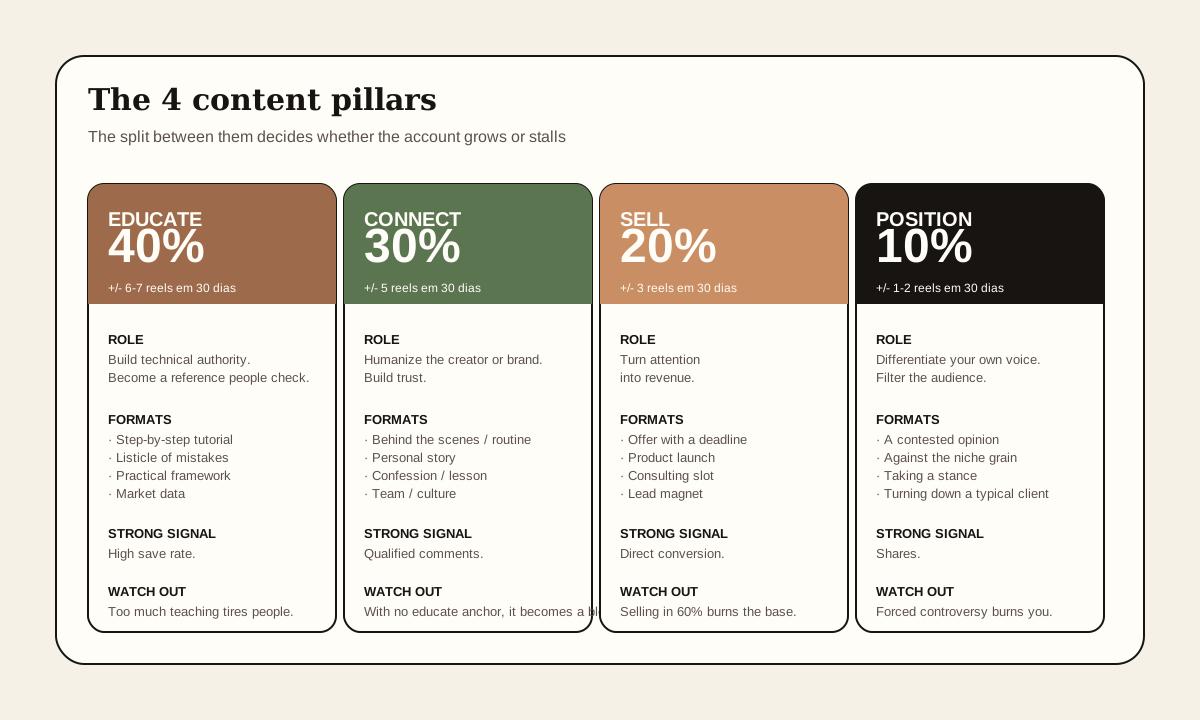
1. Educate · 40%
Content that teaches something practical in your niche. Tutorial, tip, framework, comparison, market data. It is the pillar that generates the most saves and shares (and Instagram weighs those two signals heavily).
Role: build technical authority, become the reference people check.
Examples:
- "How to read the reels retention graph in 4 steps"
- "5 mistakes that kill your Meta pixel"
- "Comparison: Meta CAPI vs Google Enhanced Conversions"
Watch out: teaching and only teaching becomes a tax seminar. The audience tires of being lectured and starts skipping.
2. Connect · 30%
Content that humanizes the creator or the brand. Behind the scenes, opinion, personal story, irony, vulnerability. It is the most neglected pillar in B2B and service accounts, and the one that builds the most trust over time.
Role: turn followers into fans, build community, sustain engagement.
Examples:
- "I charged $1,500 for consulting and felt embarrassed. Now I charge $12,000."
- "Behind the scenes of the brief we closed yesterday"
- "Why I never work with a client who asks for a quote by email"
Watch out: connecting without having educated first becomes a personal self-help blog. The connection pillar works anchored in technical authority.
3. Sell · 20%
Offer content, conversion, a direct CTA. Launch, promotion, open slot, active recruiting.
Role: turn attention into revenue.
Examples:
- "Three consulting slots open for this quarter"
- "June batch only: startup NDA template, $37"
- "New client onboarding closes Friday"
Watch out: selling is only 20% of the calendar. Whoever sells in 60% of the calendar burns the audience in 8 weeks.
4. Position · 10%
Strong opinion, controlled controversy, going against the grain. Positioning is not "selling", it is saying where you stand in the niche's debate.
Role: clarify who you are (and who you are not) for, filter the audience, create differentiation.
Examples:
- "Why someone with a Claude Pro subscription does not replace a media buyer"
- "If your CRM does not talk to messaging in 2026, you have a 1990s CRM"
- "We turn down clients who want performance without a pixel implemented"
Watch out: positioning has to be real. Forced controversy burns reputation.
The 40/30/20/10 split explained
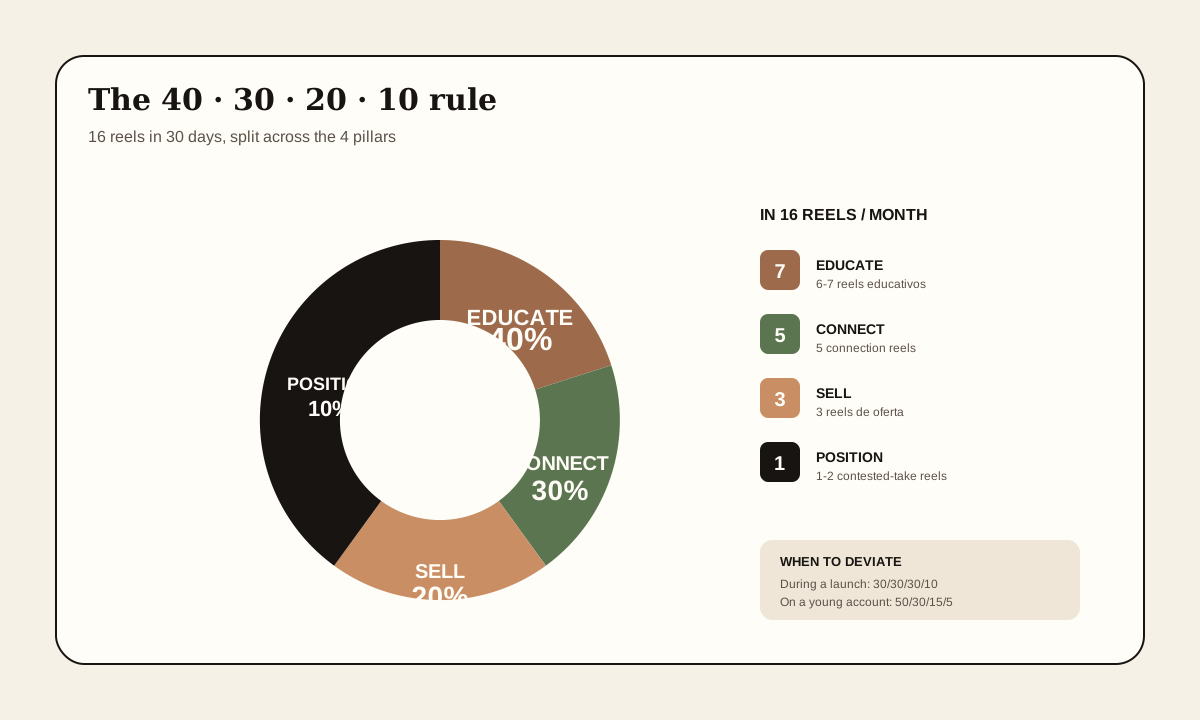
The simple rule: across 30 days with 4 reels a week (16 reels total), the ideal split is:
- 6 to 7 educational (educate)
- 5 connection (connect)
- 3 selling (sell)
- 1 to 2 positioning (position)
Why that proportion:
Educate pulls new reach. Educational content travels further than selling content because audiences save, share and comment. It is the growth engine.
Connect sustains the base. Without connection content, the audience that came from educate does not stay. It becomes an empty number. Connection is what turns a follower into a community.
Sell harvests. You only sell well to an audience that already trusts you. Selling in 20% of pieces cashes in on the trust built by the other 80%.
Position filters. Controlled controversy repels people who are not your client and attracts the ones who are. 10% is enough. More than that and you become a controversial brand rather than a technical one.
The 30-day template, filled in
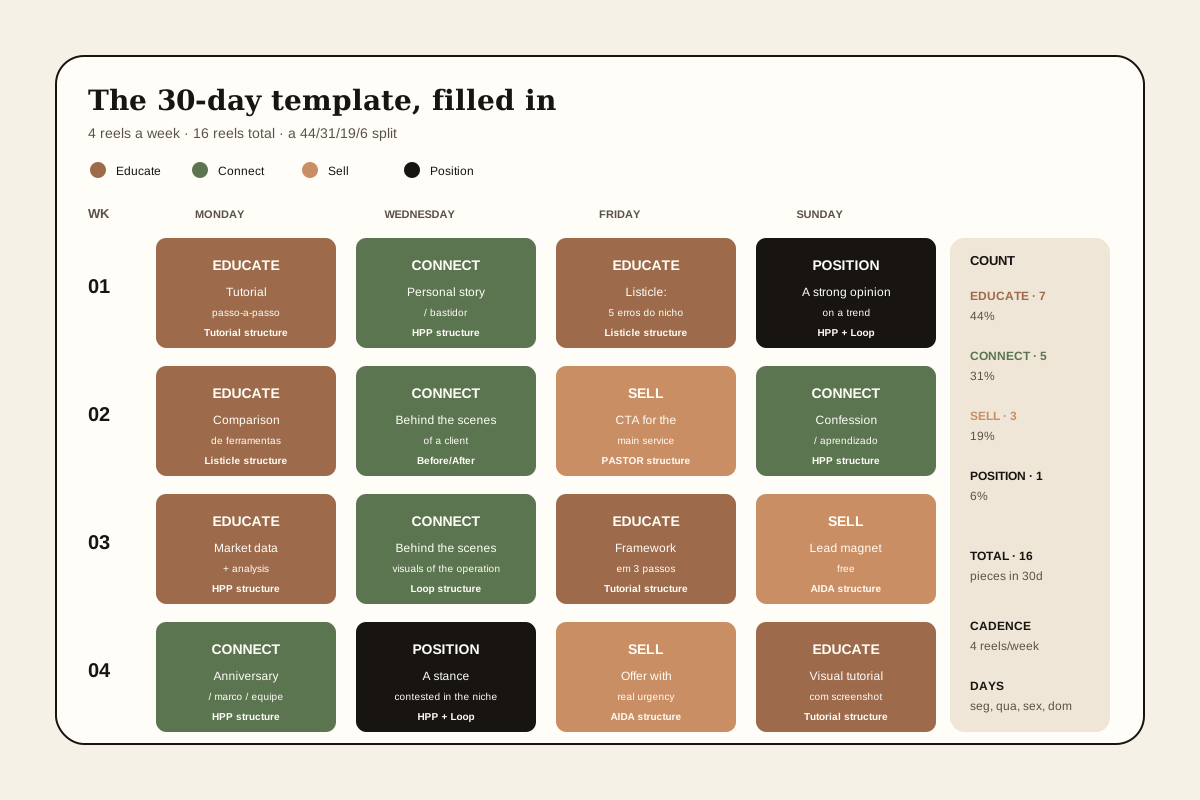
Recommended weekly structure for a service business (SMB, consulting, law firm, clinic, info product):
Week 1
| Day | Pillar | Type | Structure |
|---|---|---|---|
| Monday | Educate | Step-by-step tutorial | Tutorial |
| Wednesday | Connect | Personal story / behind the scenes | HPP |
| Friday | Educate | Listicle: 5 mistakes in your niche | Listicle |
| Sunday | Position | Strong opinion on a trend | HPP + Loop |
Week 2
| Day | Pillar | Type | Structure |
|---|---|---|---|
| Monday | Educate | Tool comparison | Listicle |
| Wednesday | Connect | Behind the scenes of a recent client | Before/After |
| Friday | Sell | CTA for the main service | PASTOR |
| Sunday | Connect | Confession / lesson learned | HPP |
Week 3
| Day | Pillar | Type | Structure |
|---|---|---|---|
| Monday | Educate | Market data + analysis | HPP |
| Wednesday | Connect | Visuals of the operation | Loop |
| Friday | Educate | Practical framework in 3 steps | Tutorial |
| Sunday | Sell | Free resource (lead magnet) | AIDA |
Week 4
| Day | Pillar | Type | Structure |
|---|---|---|---|
| Monday | Connect | Anniversary / milestone / team | HPP |
| Wednesday | Position | A contested stance in the niche | HPP + Loop |
| Friday | Sell | Offer with real urgency | AIDA |
| Sunday | Educate | Visual tutorial with a screenshot | Tutorial |
Total over 30 days: 7 educate, 5 connect, 3 sell, 1 position. A 44/31/19/6 split, with a slight excess in educate (which compensates for the start of a month needing to anchor authority).
Adaptations: local service vs national business
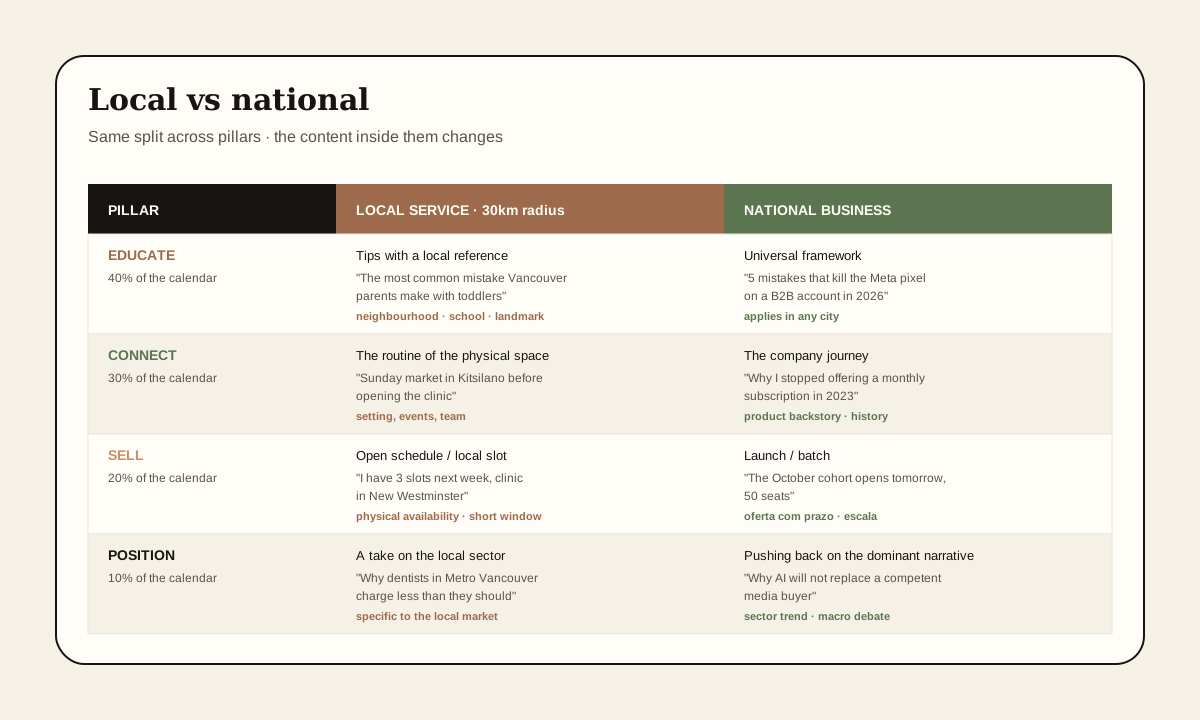
The base split stays 40/30/20/10. What changes is the content inside each pillar.
Local service (30km radius)
Who: dentist, lawyer, salon, restaurant, gym, clinic, local accountant.
Adaptation:
- Educate becomes tips with local references ("the most common mistake Vancouver parents make with toddlers")
- Connect becomes the routine, the team, the physical space, local events
- Sell becomes an open schedule, slots at time X, a condition valid for people living in Y
- Position becomes an opinion about the specific local sector
Geo-targeting inside the content: mentioning neighbourhoods, schools and recognizable landmarks raises retention by 20-30 points compared with generic content in the same niche.
National business
Who: B2B SaaS, e-commerce, info product, agency, national consultancy, product brand.
Adaptation:
- Educate becomes a universal framework, national market data, tool comparisons
- Connect becomes the founder's story, the company journey, product backstory
- Sell becomes a product launch, a cohort batch, a national offer
- Position becomes an opinion on a sector trend, pushing back on the dominant narrative
No specific local reference. Content applies regardless of city.
Ideal cadence: 3 to 5 reels a week
The "you have to post every day" myth needs to die. Hootsuite analysis (2025) showed:
- 2 reels/week: slow but sustainable growth
- 3 to 5 reels/week: the sweet spot, best effort-to-reach ratio
- 7 reels/week (daily): same average retention, more creator burnout, same aggregate performance
- More than 7/week: retention starts falling from monotony
Posting 4 times a week with a balanced calendar beats, in aggregate, posting 7 times a week with no method. The difference is not volume, it is distribution.
What every editorial calendar needs
The non-negotiable elements of a calendar that works:
- A planned publication date (with at least 5 days between recording and publishing)
- A declared pillar (educate, connect, sell, position)
- A chosen script structure (PASTOR, AIDA, Loop, HPP, Tutorial, Listicle, Before/After)
- A written hook (3 to 5 test variations)
- A specific CTA (not "follow us", but "comment X")
- The expected success metric (reach, saves, conversion, shares)
- A weekly review of what worked and what to cut
Missing any of these and the calendar becomes a sheet of paper. With all of them, it becomes an operation.
The 3 most common editorial calendar mistakes
1. Concentrating 80% in educate. The audience tires of being taught. They stop commenting, saving, sharing. Reach flattens in 4 to 6 weeks.
2. Skipping connect. Without connection content, the account becomes a cold corporate blog. It grows to a ceiling and parks there.
3. Posting selling content in 60% of pieces. The audience notices and leaves. The account becomes a constant ad and stops being a source of information.
The rule: if you would not follow this account as a stranger, neither can your audience.
FAQ
How many reels a week should I post? 3 to 5 is the sweet spot. Above 5 tires the creator without proportional performance gain. Below 3 grows slowly. In specific cases (a launch or an intensive campaign), up to 7 works, but only for short periods.
Can I have more than 4 pillars? You can subdivide the 4 into sub-categories (technical educate vs trend educate, behind-the-scenes connect vs opinion connect). But the macro structure works better with 4 main pillars than with 7 or 8. More than 4 gets confusing for the audience.
Is selling at 20% not too little? On an account growing organically, 20% is the ceiling. Selling more than that burns the audience. On an account with a large loyal base and a strong offer, you can go to 25-30% temporarily. On a B2B account with a long sales cycle, 15% is usually enough.
How long until a balanced calendar shows results? 30 to 60 days to see a change in engagement metrics (save rate, share rate, qualified comments). 90 to 180 days to see a change in conversion metrics (qualified DMs, leads, sales). A calendar changes nothing in the first week.
Can I use AI to write the calendar? To generate ideas inside each pillar, yes. To decide the split across pillars, that is the creator's strategic decision, not AI's. AI repeats the market's average pattern, which does not differentiate you.
What if I do not have ideas for every pillar? That is a sign you are only living in one pillar. A balanced calendar starts with topic research inside each one. Usually the "weak" pillars in the diagnosis (connect and position) are exactly the ones missing for the account to break through.
Does the calendar change during a launch? Yes. In a launch window (10 to 14 days before the sale opens), the split becomes roughly 30/30/30/10, with selling up and educate proportionally down. It returns to 40/30/20/10 afterwards.
Conclusion
An editorial calendar is not a spreadsheet of "what to post", it is a distribution decision across 4 pillars. 40% educate pulls reach. 30% connect sustains the base. 20% sell harvests. 10% position filters.
The difference between an account that grows and one that stalls in 2026 is rarely creativity. It is mix. Whoever rebalances the calendar to 40/30/20/10 sees a return in 30 to 60 days. Whoever insists on "I only post what I feel like" stays stuck under their own ceiling.
Volume does not replace distribution. Distribution does not replace quality. All three together is what scales.
Read next
- The 7 reels script structures that hold retention in 2026 · which structure to use in which pillar
- 30 reels hooks that grab in the first 3 seconds · hooks by pillar
- Reels scripts for services vs products · adjusting the calendar to the nature of the business
- Video scripts: how to write one from scratch · the document behind each piece on the calendar
Sources and references
- Hootsuite · Social Media Trends Report 2025
- Later · Reels Performance Analysis
- Meta Creator Lab · Reels Best Practices
This is Koko's point of view on why the editorial calendar is the most underrated piece of social media engineering in 2026. If you want to unlock a brand or creator account, talk to us.